Why Crack Filling Is Critical for Your Asphalt in Montana
Small Cracks, Big Consequences
That hairline crack in your driveway might not look like much today — but in Montana's Flathead Valley, it's a ticking time bomb. Every crack in your asphalt is an open invitation for water, and once water gets in, the freeze-thaw cycle takes over. What starts as a thin line becomes a pothole, then a crumbling mess that requires full replacement.
Crack filling is the single most effective preventive maintenance you can do for your asphalt — and it's a fraction of the cost of major repairs.
How Montana's Climate Destroys Cracked Asphalt
The Flathead Valley experiences dramatic temperature swings that are uniquely destructive to asphalt:
Left untreated, a single crack can spread into an entire network of damage within just one or two Montana winters.
Types of Asphalt Cracks
Not all cracks are created equal. Understanding what you're looking at helps determine the right repair approach:
Linear and edge cracks are ideal candidates for crack filling. Alligator cracking often indicates deeper problems that may require patching or overlay in addition to sealing.
What Is Professional Crack Filling?
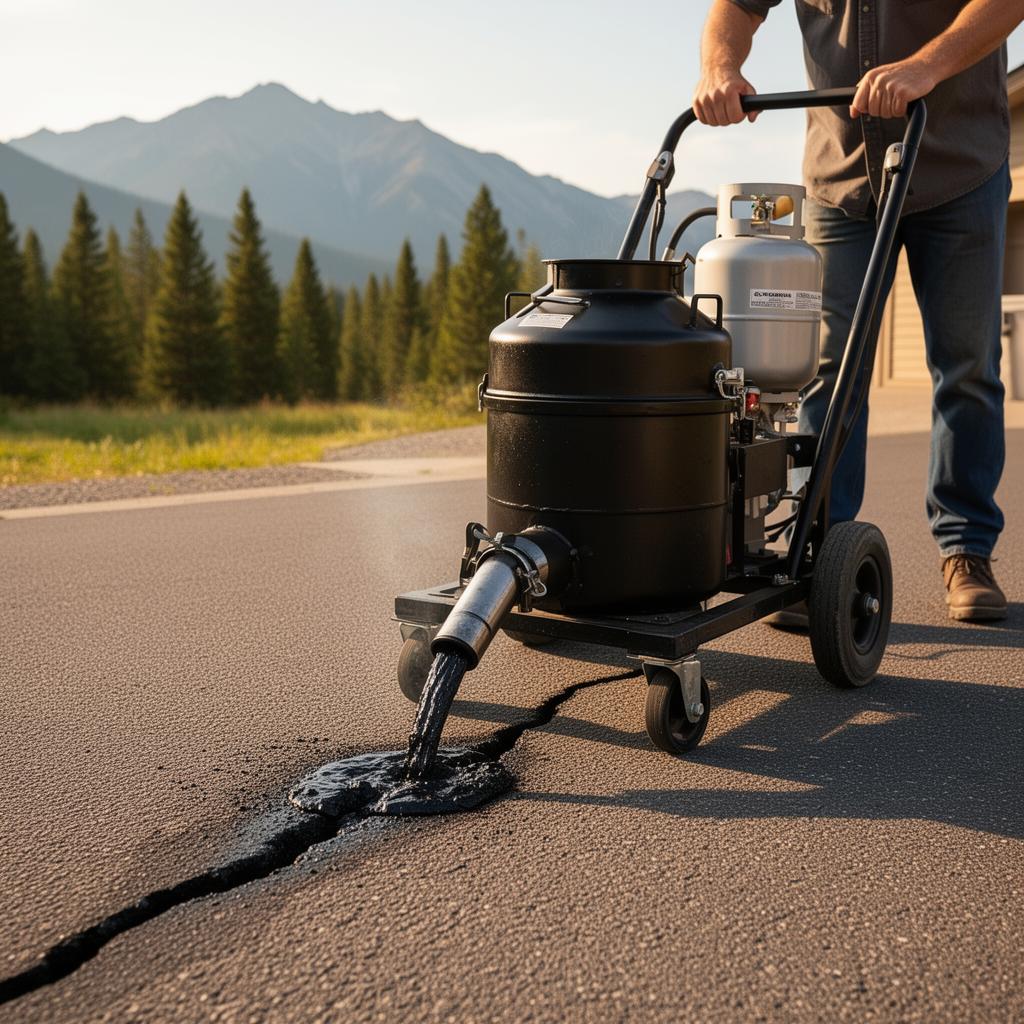
Professional crack filling involves cleaning out debris and vegetation from the crack, then filling it with a hot rubberized sealant that bonds to the asphalt and flexes with temperature changes. Here's what sets professional work apart from DIY:
Crack Filling vs. Seal Coating: What's the Difference?
These two services work together but serve different purposes:
For best results, cracks should always be filled before seal coating. Applying seal coat over unfilled cracks is like painting over rust — it looks better temporarily but doesn't solve the underlying problem.
When Should You Fill Cracks?
The best time for crack filling in the Flathead Valley is late spring through early fall, when temperatures are consistently above 40°F. Ideally:
Signs Your Asphalt Needs Crack Filling
Schedule a professional assessment if you notice:
The Cost of Waiting
Here's the reality: crack filling is one of the most affordable asphalt maintenance services available. Ignoring cracks until they become potholes or structural failures means you're looking at patching, overlay, or complete replacement — all of which cost dramatically more.
A simple rule of thumb: every year you delay crack filling, repair costs can increase significantly. The math is clear — fill cracks early and often.
Protect Your Asphalt Before It's Too Late
Montana's climate won't go easy on your driveway or parking lot. But with timely crack filling and regular seal coating, your asphalt can last decades instead of falling apart in just a few years.
At Flathead Pressure Washing & Soft Wash, we provide professional crack filling and seal coating services for residential driveways and commercial parking lots throughout the Flathead Valley. We're fully insured, BBB accredited, and committed to doing the job right.
Request your free quote today or call us at (406) 607-2981.
Ready to see the difference?
Get a free, no-obligation quote for your property today.
Request Your Free Quote